The first time you step onto a squash court, you are learning two things at once. How to hit the ball, and what your coach means when she says “drop and drive”.
You can learn the second one at home, before you arrive.
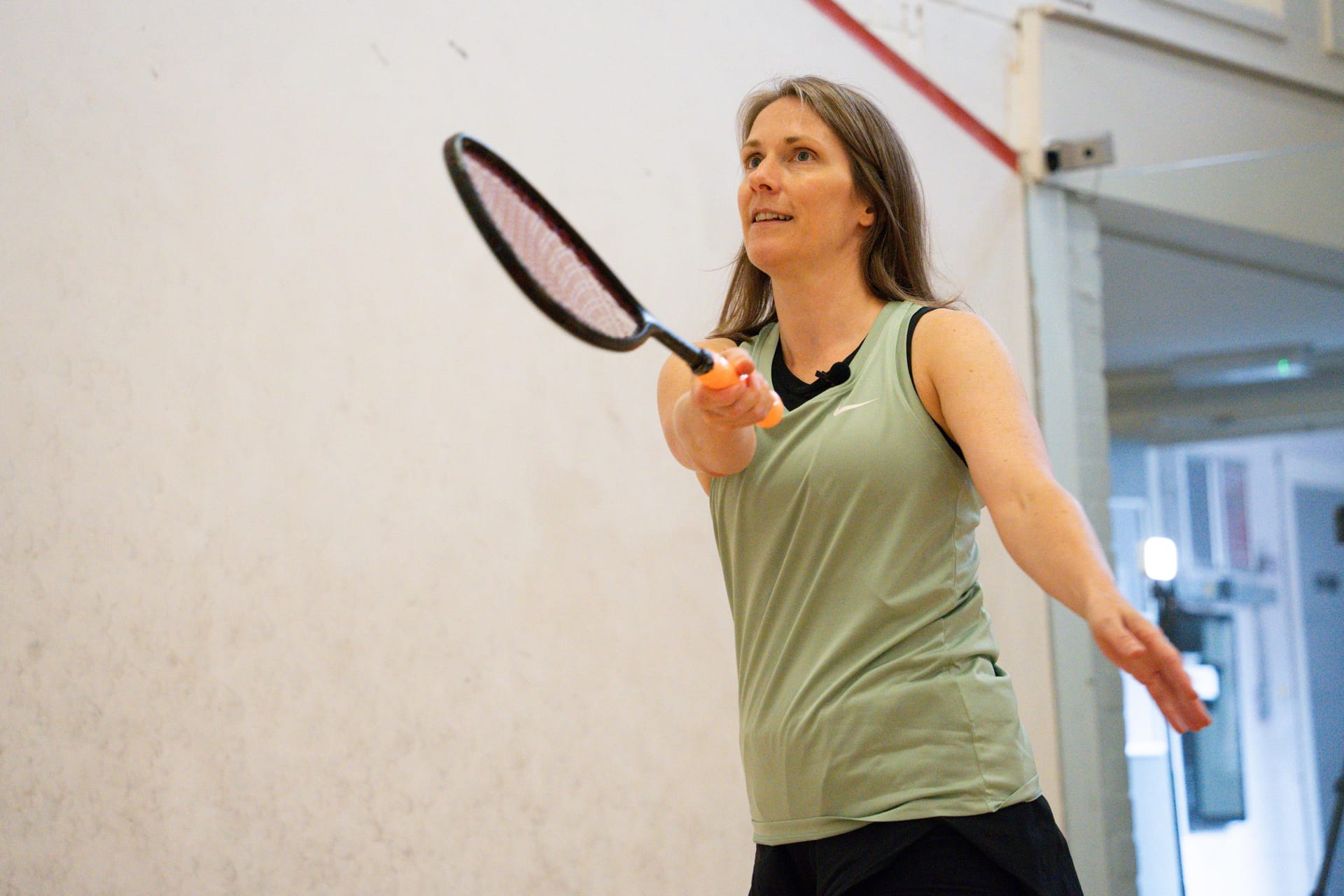
We made a free video series with SquashSkills for exactly that. It is called the SquashLevels 0-100 Beginner Series: eight short videos, 18 minutes and 27 seconds in total, free for everyone. I present it alongside Courter coaches Lucy and Alessia. Isabelle is new to squash, and you can see her progression live on court.
Watch the full series free on SquashSkills
The small skills underneath the drills
Drills are the part you will hear about. Underneath every drill sit smaller skills, and the series covers those too.
Spatial awareness. Knowing where you are on court, where the ball is heading, and that all four walls are in play.
Hand-eye coordination. Watching the ball off the wall and meeting it at the right moment.
Moving around the court. Turning side on to hit, getting to the ball, and getting back to the T, the middle of the court.
What good looks like. Seeing each drill done well, so you know what you are aiming for before you try it.
Not everyone played racket sports as a child. If you did not, these are the skills that may get missed, because it is assumed you already have them from childhood. That is who this series is for.
Eight free squash videos for beginners, from first grip to first serve
1. Start here
See where the series goes: one step at a time, from picking up a racket to serving and returning a serve.
Watch video 1: Introduction (1:18)
2. The right ball, racket and shoes
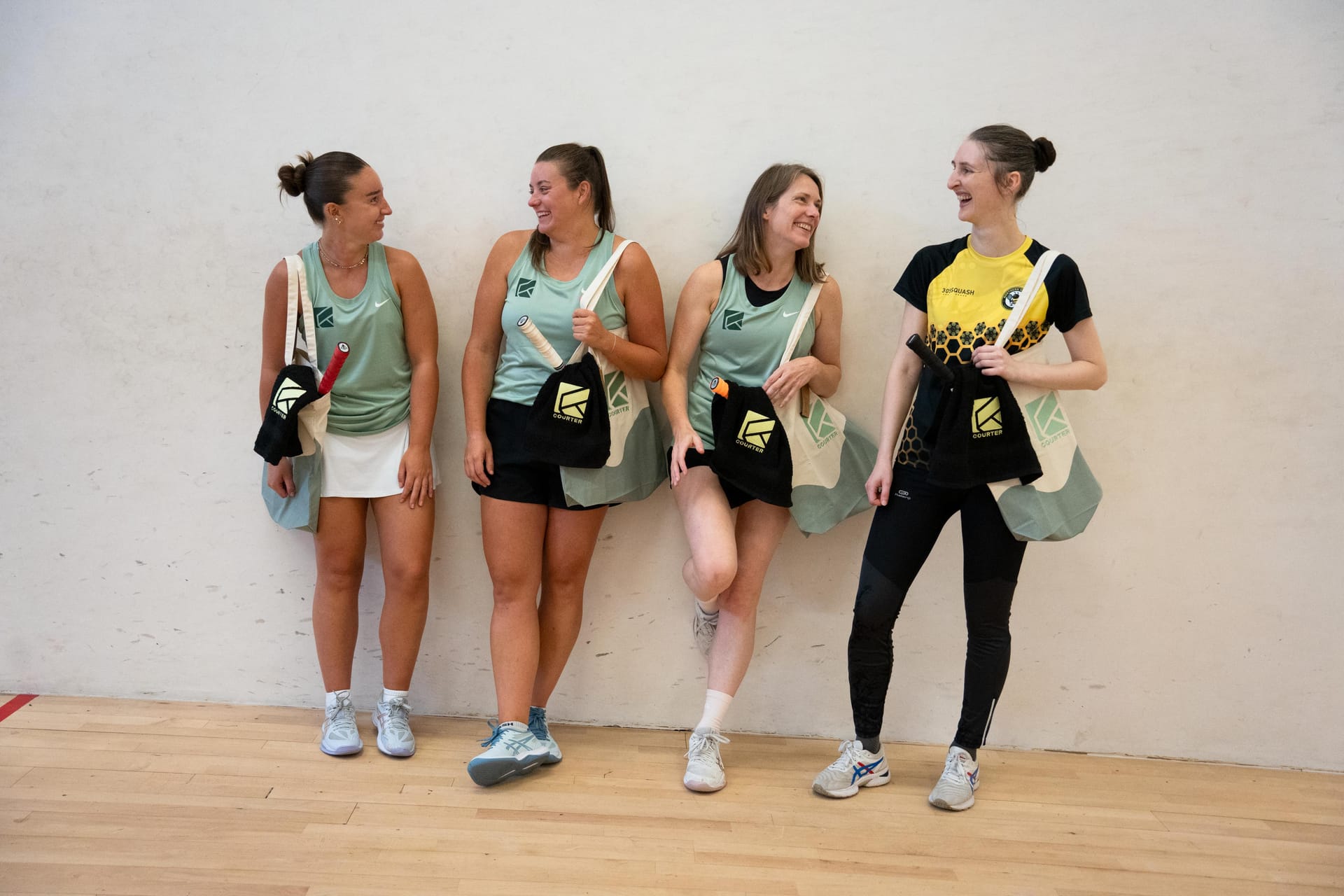
The ball catches out a lot of beginners. The double yellow dot is the one the professionals use, and it is also the slowest ball in the range. It needs warming up before it bounces properly. While you learn, ask for a bouncier ball that doesn't need warming up.
Rackets weigh from about 110 to 145 grams, and the weight is printed on the frame as the “unstrung weight”. Go lighter while you are learning. I play with a 120g racket.
Clean gym shoes are fine to start, as long as the soles are non-marking.
On Courter, your coach can bring a racket and a ball, so there is nothing to buy before your first session.
Watch video 2: Equipment and kit (2:46)
3. How to hold the racket, and what the lines mean
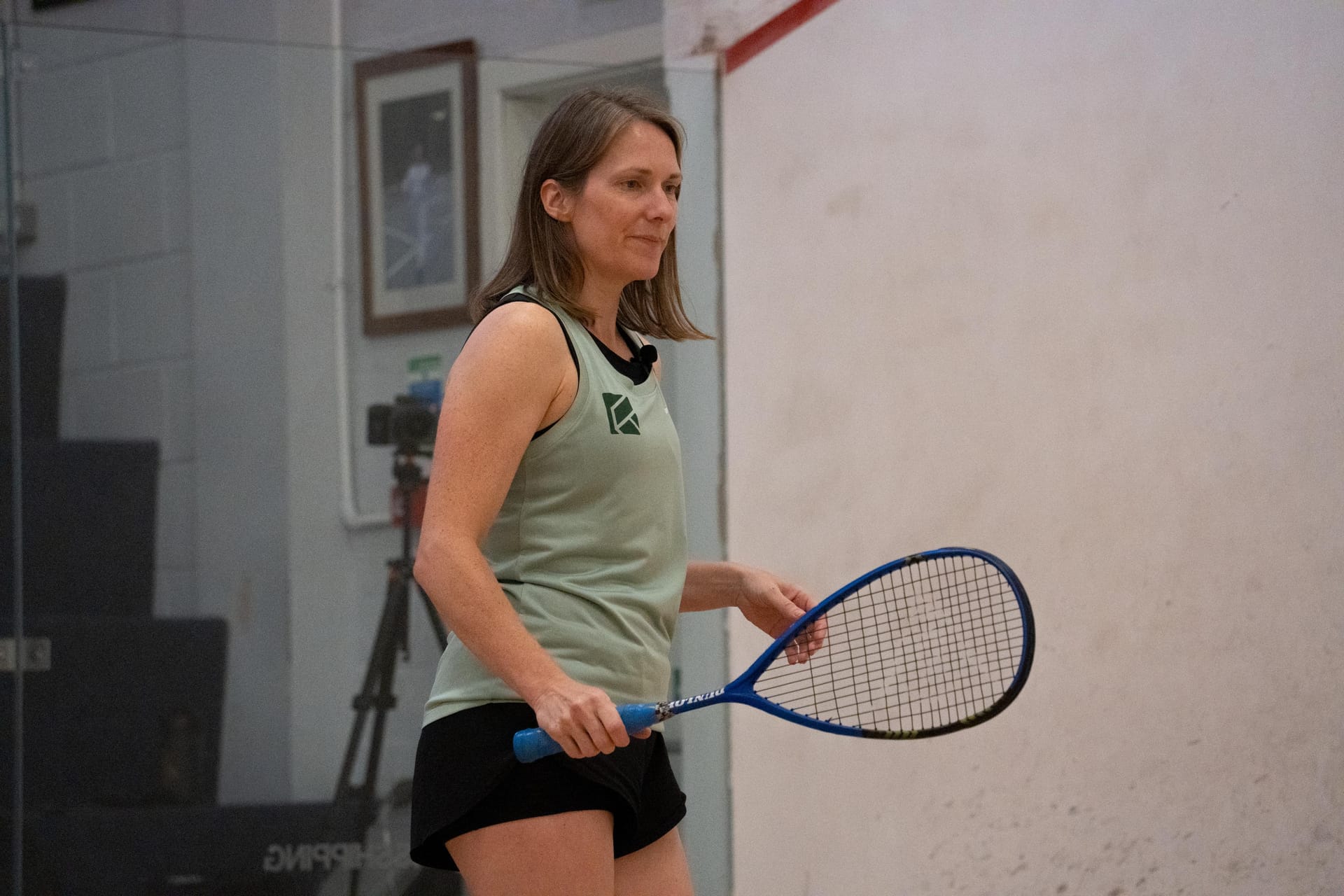
Squash uses a loose grip. Lay the handle across your fingers and hold it with your thumb and forefinger. Cock your wrist so the racket head stays up, and leave some space between your elbow and your body. The cocked wrist feels awkward at first, but it gets easier as the muscles build.
Then the court, which is where spatial awareness starts. All four walls are in play, and so is the space above your head. On the front wall, a ball on or above the top line is out, and so is a ball on or below the bottom line, which is called the tin. The middle line and the lines on the floor are for the serve.
Watch video 3: Court awareness (2:29)
4. Drop and drive
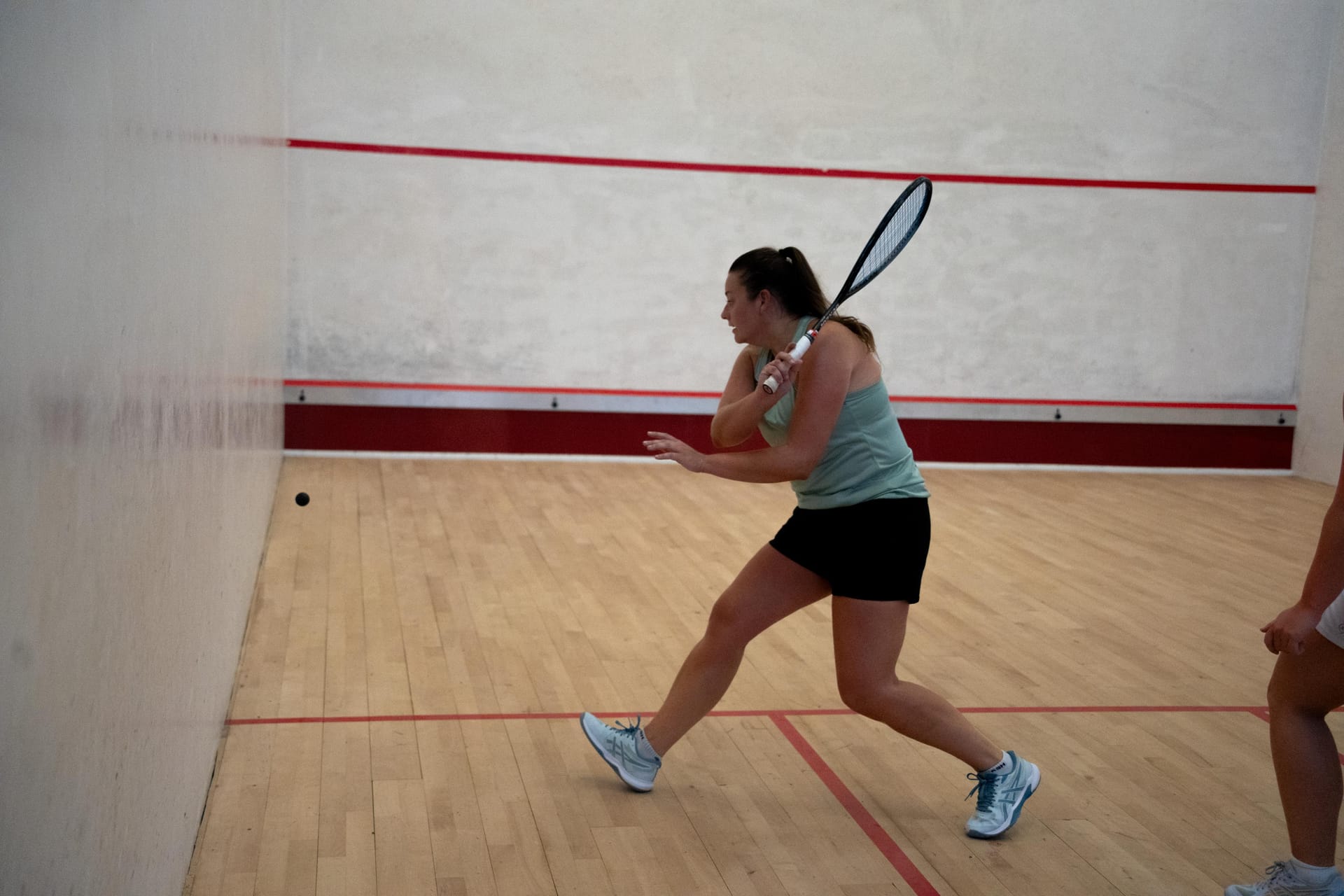
The go-to drill in squash, and the first drill in the series. Your coach feeds the ball, either from the back with a racket or from the front by hand. You move, turn, and hit it straight to the back of the court, then go back to the T, ready for the next one.
Three things make it work. Face the side wall, not the front wall. Keep your wrist cocked. Leave space between your arm and your body.
Then read the bounce and let the ball come to you. Waiting that little bit longer is what gives you better timing.
Watch video 4: Drop and drive (1:34)
5. Drop, drop, drive
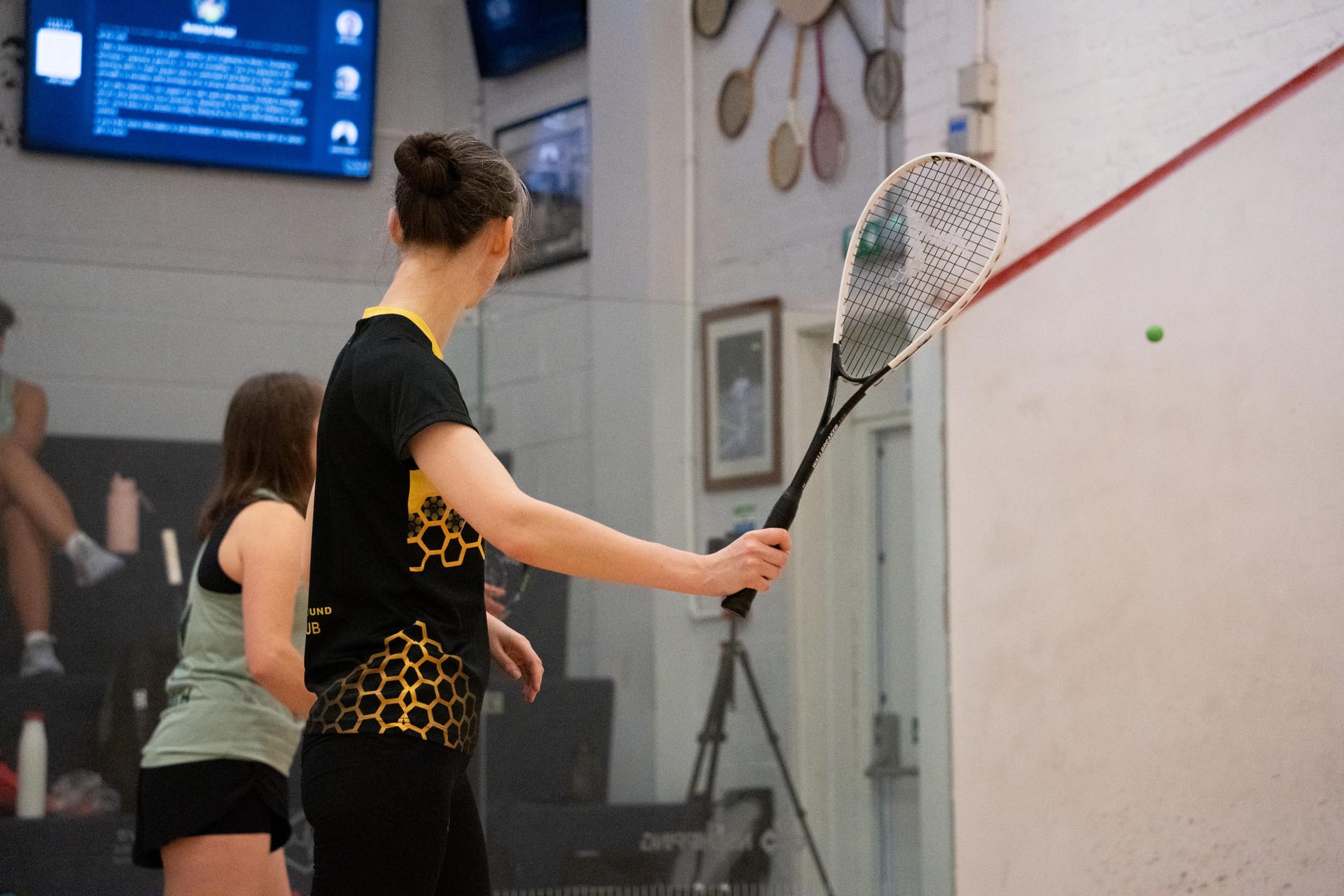
This is drop and drive with one extra shot. Your coach feeds, you drop the ball to yourself at the front, then you drive it long.
The drop is the same swing as the drive, only softer. That is where touch and control come from. One tip worth keeping: come round to the ball in a curve, not a straight line. It gives you room to step in and meet the ball out in front, instead of ending up on top of it.
It can feel less natural on the backhand. That is normal, as it is generally less practised.
Watch video 5: Drop, drop, drive (2:51)
6. Boast and drive
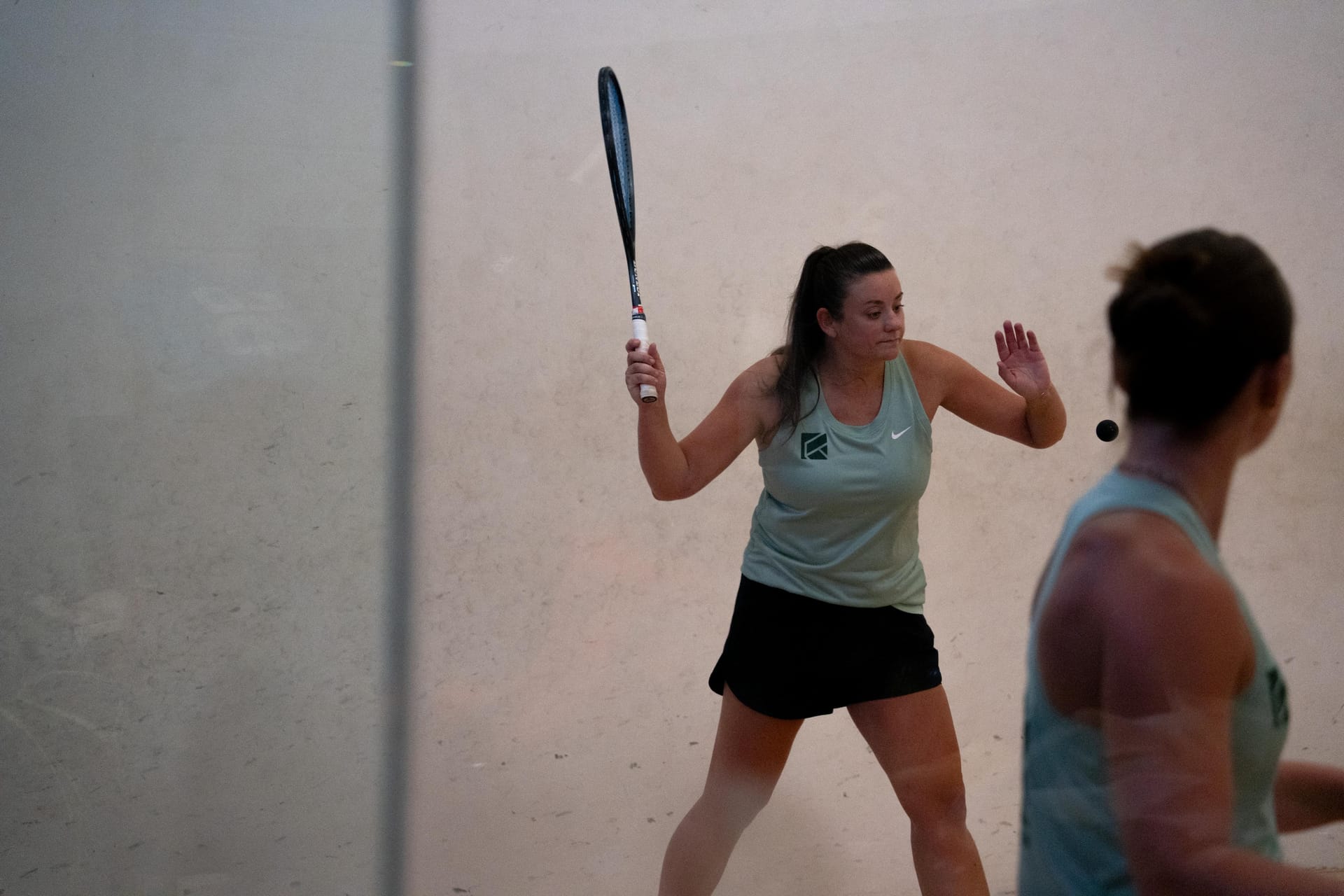
Up to now, every shot has gone straight to the front wall. This drill brings in the side walls.
A boast is any shot that hits the side wall first. Your coach boasts from the back. You wait on the T, move into the front corner, and drive the ball long. Then you switch sides, forehand to backhand, so you cover both front corners. Come back to the T backwards, so you can spring off to the next shot.
It is the hardest drill so far, and it is where the walls start to make sense.
Watch video 6: Boast and drive (2:24)
7. The serve and the return
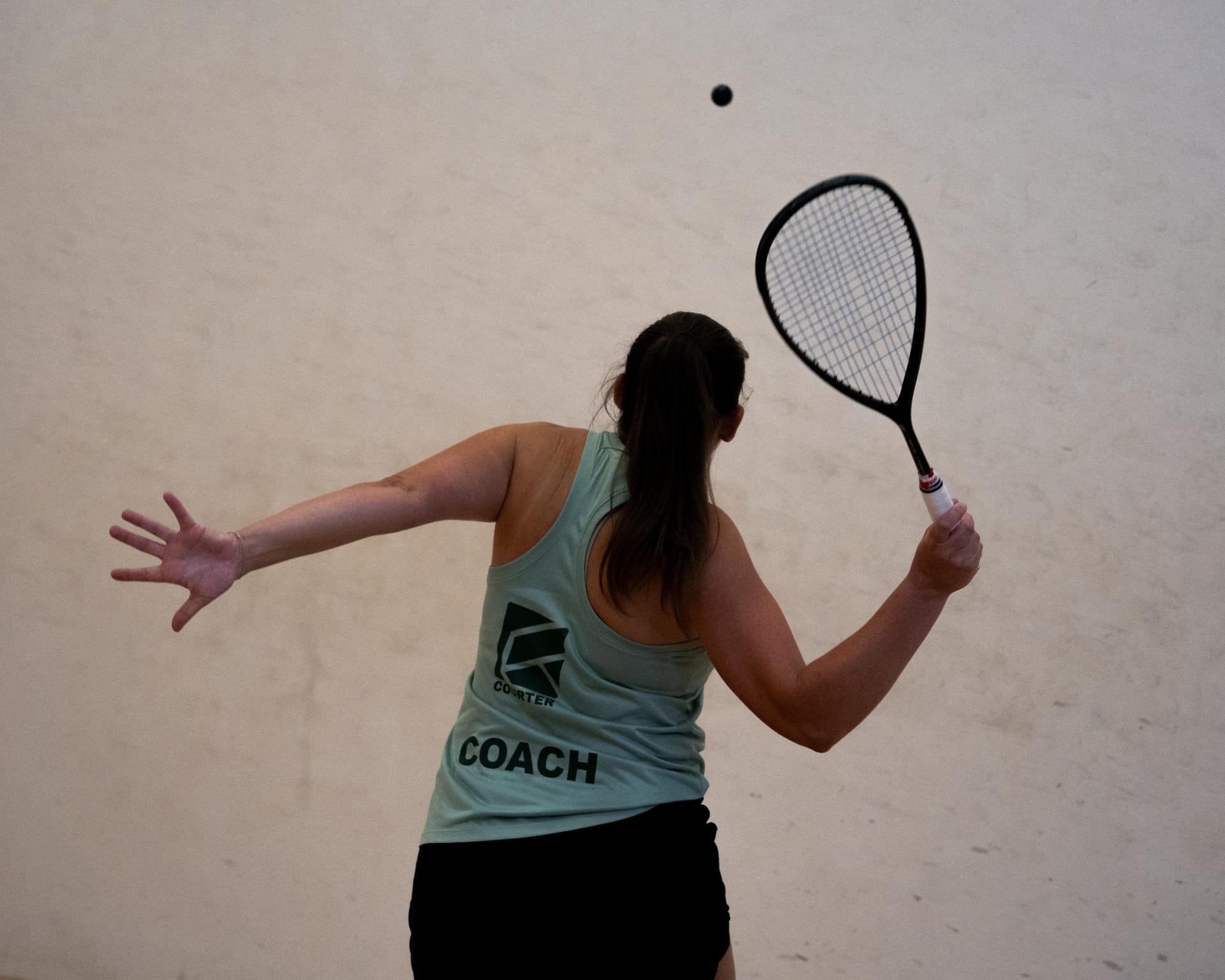
Every rally starts with a serve, and the serve asks for something unusual. Stand still, throw the ball up with the hand you rarely use, then step and swing. Keep one foot in the service box and aim for the front wall, between the service line (the middle line) and the top line. The ball must land in the opposite back box.
The throw is the part to practise, and you can do that at home. Throw, catch, repeat, with your non-dominant hand. This standing start may take some practice, so don't worry if you don't pick it up straight away. You will.
The return keeps things simple: any connection is a success. Stand a little further up the court, start with your racket high, and push the ball back to the front wall. Where it lands can wait.
Watch video 7: Serve and return (4:32)
8. Ready for your first session
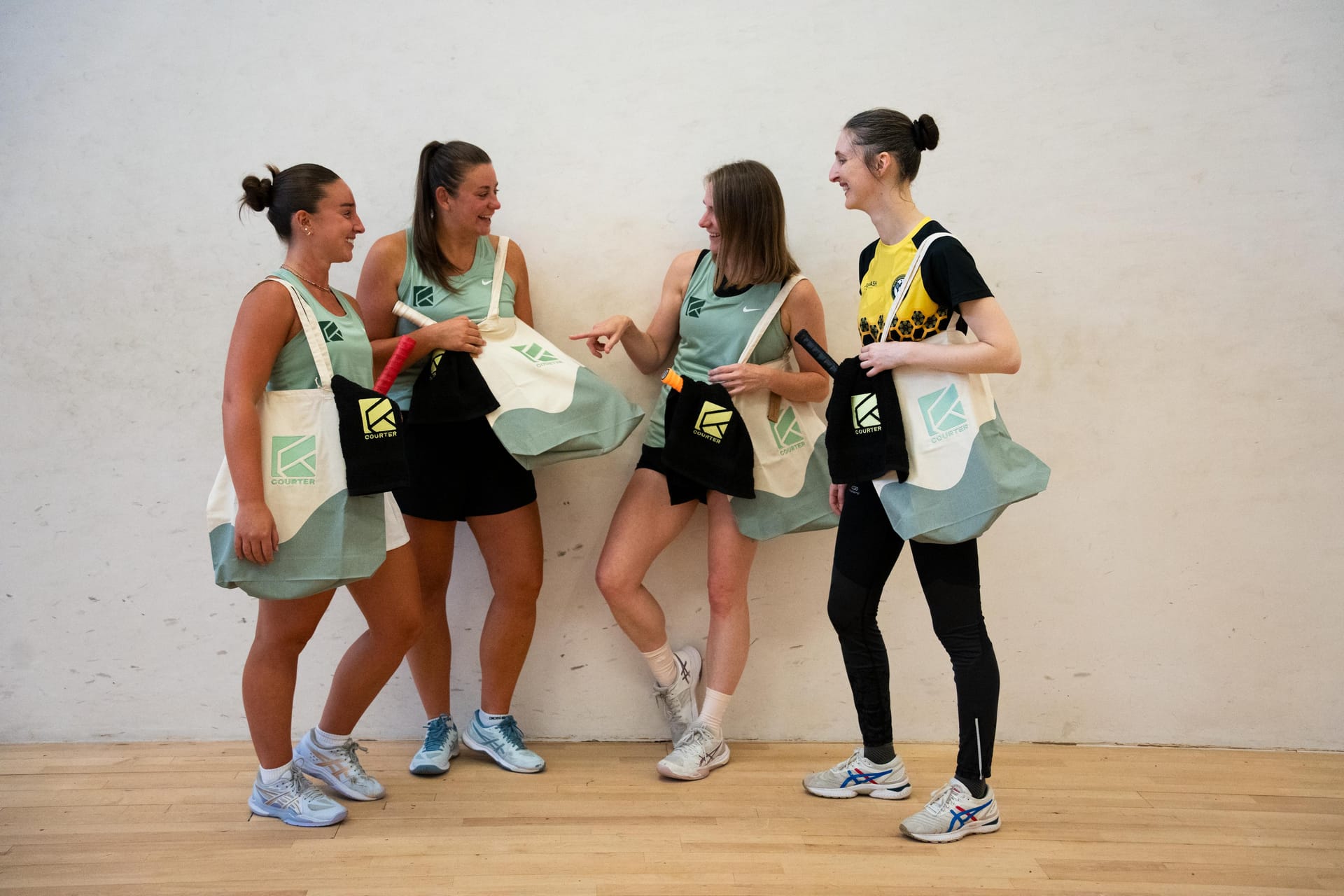
The last video is 33 seconds long. By the end of the series you know what your coach means by all four drills, and that takes a lot of the nerves out of a first session.
There is a question for you at the end, too: what should we film next? Maybe the first game? Maybe how to use the walls?
Watch video 8: Conclusion (0:33)
Prefer to watch in one go? The full series plays all eight back to back.
What 0 to 100 means
SquashLevels is a rating system for squash. Play matches and it gives you a level that moves with your results, so you can watch yourself improve. It is free to join.
The series takes its name from the very start of that scale, and each drill is matched to a step of it. Drop and drive is 0 to 25. Drop, drop, drive is 25 to 50. Boast and drive is 50 to 75. Serve and return is 75 to 100.
How to use the series with Courter
Watch the videos before your first session, after it, or both. They are a head start, not homework. Your coach starts from wherever you are.
If you have watched them, say so in your booking notes. Your coach will know you already speak a little squash, and she can pick up from there.
Want to know what happens on the day itself, from what to wear to the last rally? We have written that up separately.
Every coach on Courter is female and qualified, and every player is welcome. You can see who coaches near you, when she is free and the full price, court included, before you book.
Book your first Individual session →
Common questions
Are the videos free?
Yes. All eight are free to watch on SquashSkills, and you do not need an account to press play.
How long is the series?
18 minutes and 27 seconds for all eight. The longest, on the serve and the return, is four and a half minutes, and the shortest is 33 seconds. There is also a full version that plays all eight in one go.
Do I need to watch the videos before my first lesson?
No. They are a head start, not homework. Your coach starts from wherever you are, whether you have watched all eight or none.
What is SquashLevels?
A rating system for squash. Play matches and it gives you a level that moves with your results. It is free to join, and the series is named after the very start of its scale.
Who presents the videos?
Sally Archibald, Courter's founder and a qualified squash coach, with Courter coaches Lucy Townley and Alessia Osborne. Isabelle, who is new to squash, learns on court with them.