
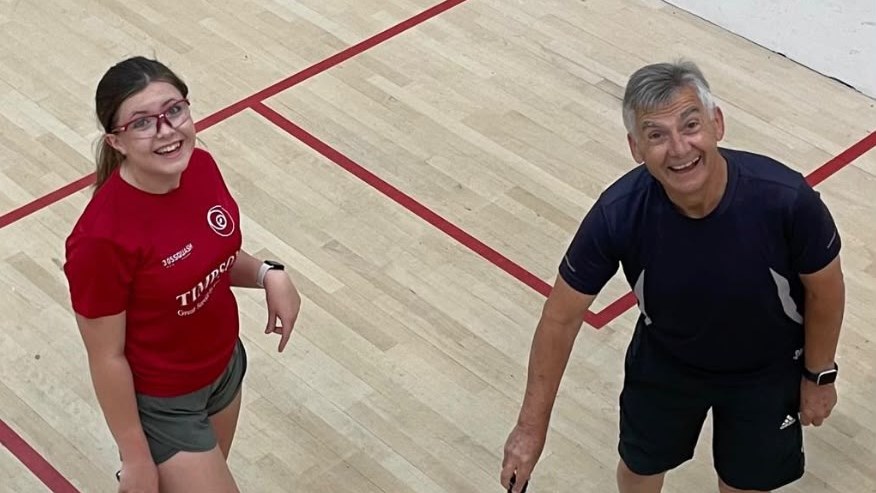
One ball, your friends, and the fun of hitting it against all four walls. That is squash.
It is not what most people picture when they hear the word, and that gap is costing the sport thousands of players who would love it if they ever tried.
What do you picture when you hear the word squash?
Two aggressive male players fighting it out on court, shouting, maybe with a mullet. Then in the club house drinking pints, with a sign saying no women allowed.
Where the reputation came from
The reputation is not invented. It is just describing an old version of the game.
Most people's reference point is a leisure centre court in about 1994, someone's dad coming off it purple in the face, slightly stained squash whites, proudly shouting about how hard he can hit the ball.
Watch professional squash and it looks punishing, because it is. Players cover a court the size of a small room hundreds of times an hour, lunging into corners, and the rallies do not stop. It looks incredible, and it looks like something you would need to already be fit to attempt.
Both of those are real. Neither is something you will experience when you start squash.
The ball is important
Squash balls come in different speeds, marked with coloured dots. The double yellow ball used at the top of the game barely bounces at all. It has to be warmed up before it will move properly, and if you cannot hit it hard enough to keep it warm, it dies on the floor.
That is the ball nearly every beginner is handed, usually by a well meaning friend who plays. It is the worst possible introduction to the sport, and it is why so many people try squash once and never go back.
Beginners should be using a blue or red ball. It bounces high, it sits up, and it waits to be hit. Same court, same rules, completely different experience. Rallies happen. People laugh and come back for more.
One ball is the difference between squash being impossible and squash being fun.
What you do not need to play squash
To be fit. Fitness is what competitive squash demands, not what it requires to start. A beginner rally is slower and much more forgiving. You will get a workout, but the pace is set by the people on court.
Your own equipment. Coached sessions provide rackets, balls and protective eyewear.
To be young. Squash rewards reading the ball and being in the right place, which are skills that improve with age and experience, not decline.
Someone of your own standard. This is the one that stops most people. In squash you do not need an evenly matched opponent to have a good time, because a coach or a stronger player can feed the ball to keep a rally going. A parent and a child can play a proper rally together. So can two people twenty years apart.
Who squash actually suits
People with no time. Forty minutes, indoors, one court, no travelling to a pitch and no rain stopping play. Squash is one of the most time efficient sports going.
People starting from nothing. The learning curve at the beginning is steep in the good sense. With the right ball, most people are rallying in their first session.
People coming back to sport. Squash is forgiving of a gap. It is not a sport where everyone else has been playing since they were six and you have missed the boat.
Families. Because size and strength matter less than timing, children can compete with adults sooner than in most sports. They enjoy that enormously.
Anyone who has been put off by the version in their head. Which, given the reputation, is a lot of people.
The ways in
Coaching is the shortcut past the bad first experience, because a coach gives you the right ball on the first day rather than the wrong one.
Individual coaching is one coach, one player, and the fastest way to improve.
Group sessions are for a few of you together, which suits friends starting at the same time.
Junior coaching is for ages 5 to 17, on their own.
Family sessions put parents and children on court together for the same hour.
All four start from the same place, which is that you have not played before and that is fine.
The reputation is about to be tested
Squash will be at the Olympics for the first time in Los Angeles in 2028, after decades of trying.
A lot of people are going to watch squash properly for the first time. They will see the fast, brutal version, because that is what elite sport looks like, and some of them will conclude it is not for them.
The sport most people could play is not the sport they are shown. Worth remembering, if you watch it and think it looks like hard work. At that level it is. At yours, it is forty minutes with a bouncy ball, and it is a lot more fun than it looks.
If you want to know what a first session actually involves, we have written that up separately.
Common questions
Is squash hard to learn?
Not with the right ball. Beginners should use a blue or red ball, which bounces high and is easy to hit. The double yellow ball used in competition barely bounces and is what makes squash feel impossible to newcomers.
Do I need to be fit to start squash?
No. Competitive squash is physically demanding, but a beginner rally is slower and much more forgiving. The pace is set by the players on court.
What do I need to bring to my first session?
Comfortable clothes and clean trainers. Coached sessions provide rackets, balls and protective eyewear.
What age can children start squash?
Junior coaching runs from age 5. Younger children spend most of the session learning to track and hit a moving ball, which is the foundation everything else is built on.
Is squash a good workout?
Yes. It is one of the most demanding racket sports once you are moving. That is part of why it suits people short on time.